Features
|
 Versatile, productive, and durable premium pickup Versatile, productive, and durable premium pickup
Cam-track design offers the best versatility
Versatility has been one of the key criteria when designing the R-Series Balers. Due to a narrow weather window and increasing amounts of difficult crops, such as heavy silage, growers do not want to risk losing any more time during the season.
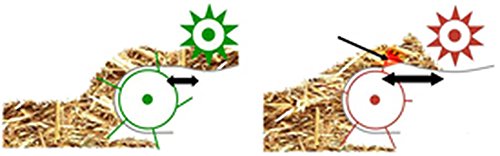
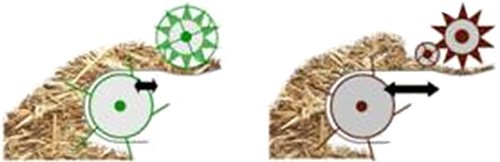
Cam-track technology provides an efficient solution for such needs. The traditional stripper design provides reduced space between the pickup tines and rotor feeder, while the tine motion helps to avoids pinching.
The cam-less technology requires long strippers, creating a dead zone between the tines and rotor. Additionally, fixed tines can easily pinch crops in sticky conditions, causing plugs that need to be manually removed.
Looking at potential component wear, the cam-track pickup features a low turning speed and big bearings on both side of the tine bars. Also, the cam lever is made of forged steel. These features guarantee a long component life and low maintenance.
Premium pickup pushes harvesting capacity a step forward
R-Series Balers are designed for the most demanding operators. The pickup features only premium components and concepts such as:
- 2.2-m (7.2-ft) wide pickup, with a 1.92-m (6.3-ft) tine-to-tine distance - this important width provides comfort and speed capacity when harvesting the largest swaths.
- Five tine bars - the fifth bar allows the tines to rake two more times per second versus the John Deere standard four-tine pickup.
- O-shaped tubular tine bars with central spider reinforcement - tine bars are assembled with ball bearings on the central spider, and central spiders highly limit tine bars bending in the very heavy crops.
- 6mm (0.23-in.) diameter galvanized tines with high strength to harvest the toughest crops.
- Tines are designed to fold to replace potential shear bolt or cam clutch overload safety. 6-mm (0.23-in.) diameter tines push pickup maximum intake capacity up to 18 kW (24.1 hp), a value often not reached by machines using cam or shear bolt protected pickup.
- Stainless-steel strippers (exclusive feature) that give highly durable rust protection, perfect gliding capacity no matter the material, and is much more resistant to acid damage caused by additive uses (propionic acid).
|
|
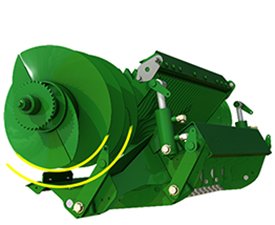
  High-Capacity (HC) Premium rotors grab the toughest swaths High-Capacity (HC) Premium rotors grab the toughest swaths
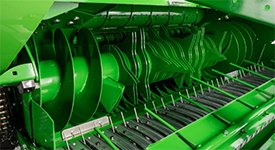
The R-Series benefits from the proven HC rotor concept featuring an in-line design
By using the HC premium rotor – a device available on John Deere round balers since 2012 – the C451R feeding system offers:
- Limited distance from the pickup to rotor tines to reduce plugging, especially in brittle straw or short silage
- Reduced number of bearings and distributed loads along the rotor to increase reliability
- Large 48-cm (18.9-in.) diameter converging augers facilitate crop transfer
RotoFlow HC Premium is the perfect solution for non-cutting uses
R-Series Round Balers can be delivered with a RotoFlow HC premium non-cutting solution.
All other John Deere round balers are equipped with a rotor feeder:
- Close to 50-cm (19.7-in.) diameter rotor for high inertia and feeding capacity
- Hardox® wear plate material (similar to the R-Series) provides long lifespan and high resistance to foreign objects (Hardox wear plate tines provide 80 percent or more resistance versus traditional S700 grade steel)
- Three tines per turn for smooth crop flow
- Tines fully enclose the tube (instead of spikes on the G-Series RotoFlow HC), giving higher tine resistance and longer lifetime
MaxiCut™ HC 13 Premium rotor offers standard cutting length with high productivity and versatility
As an alternative to the RotoFlow HC Premium, R-Series Balers can be delivered with the MaxiCut HC 13 Premium rotor.
As with the non-cutting system, the rotor features:
- Close to 50-cm (19.7-in.) diameter rotor for high inertia and feeding capacity.
- Hardox wear plate material (similar to R-Series) to provide a long lifespan and high resistance to foreign objects (Hardox wear plate tines provide 80 percent or more resistance versus traditional S700 grade steel).
- Three tines per turn (instead of two on G-Series RotoFlow HC).
- Tines fully enclosing the tube (instead of spikes on G-Series RotoFlow HC), giving higher tine resistance and longer component lifetime.
The precutter function offers:
- 0/13 knives engagement from the display. No need to leave the cab to manage knives.
- 80-mm (3.1-in.) knife spacing when all knives are engaged, a standard cutting length giving a good compromise between crops quality and power consumption.
- Heavy-duty knives thanks to the double hardening and tempering treatment. Crops are perfectly cut for long, requiring less fuel consumption and sharpening operations.
- Individually spring-loaded knives to avoid component damages when grabbing foreign objects. Compared to a shear bolt or full-set hydraulic system, this technology limits efforts on the knives and provides non-stop safety.
As with the RotoFlow HC Premium or MaxiCut HC 13 Premium, this fine chop precutter features:
- Close to 50-cm (19.7-in.) diameter rotor for high inertia and feeding capacity
- Hardox wear plate material (similar to the R-Series) that provides long lifespan and high resistance to foreign objects (Hardox wear plate tines provide 80 percent or more resistance versus traditional S700 grade steel)
- Three tines per turn (instead of two on the G-Series RotoFlow HC)
- Tines fully enclosing the tube (instead of spikes on the G-Series RotoFlow HC), giving higher tine resistance and longer component lifetime
The fine-chop precutter function offers additional features such as:
- 0/12/13/25 knife engagement from the display. No need to leave the cab to manage knives. When used alone, the 12 or 13 knives set provides a regular 80-mm (3.1-in.) knife spacing and limited power consumption. When teamed together, knife spacing is reduced to 40 mm (1.6 in.).
- Heavy-duty knives due to the double-hardening and tempering treatment. Crops are perfectly cut for long, requiring less fuel consumption and sharpening operations. When cutting at regular 80-mm (31-in.) length, the two independent knife sets extend time between each sharpening process by using the first knife set one day and the second one on the next day (time between each sharpening process given can vary depending on crop type and number of bales).
- Individually spring-loaded knives to avoid component damage when grabbing foreign objects. Compared to a shear bolt or full-set hydraulic system, this technology limits efforts on the knives and provides a real non-stop safety.
The knife slot fillers set is delivered as standard with all machines featuring the precutter. When using the MaxiCut HC Premium pickup without knives, dust and harvest matter can fill knife slots. This keeps the knives from returning to the cutting position, and plugs must be manually removed to free the knives.
The knife slot fillers take the place of knives when not cutting crops. Drop-floor holes are then filled, allowing quick and easy knife re- engagement. When cutting, the knife slot fillers are stored and locked in a convenient bracket located on the right-side of the baler
|
|
  Exclusive drop-floor concept removes the worst plugs Exclusive drop-floor concept removes the worst plugs
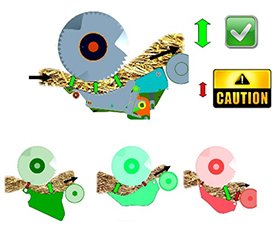
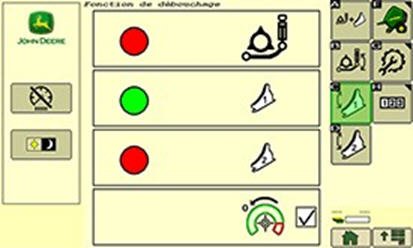
R-Series Balers are delivered standard with a drop-floor unplugging system. In case of a clog, the drop floor is managed from the display simultaneously or independently from the knives. When lowering the floor, the parallel kinematic gives 40-mm (1.6-in.) extra free space under the rotor and converging augers.
By providing a constant free space, the John Deere drop floor avoids bottlenecks existing on balers by using a movable floor with front or rear hinge. No need to have a huge opening (that sometimes causes crop loss); only a few free centimeters (inches) are enough to remove the plug.
The worst plugs generally happen when turning with the baler. The bunch of crops is blocked under the converging augers and the clog must be manually removed.
The unique John Deere full-width drop floor protects the full pickup and rotor width. Even when plugged at the converging auger level, the clog can be easily removed by the operator from the cab.
|
|
 MaxD (Maximum Density) bale chamber pushes versatility and bale weight over the limits MaxD (Maximum Density) bale chamber pushes versatility and bale weight over the limits
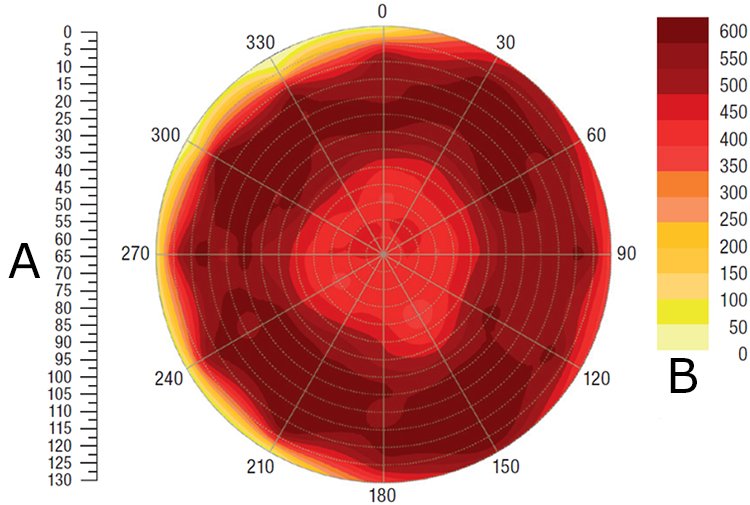
Proven high density and bale weight
Deutsche Landwirtschafts-Gesellschaft e.V. (DLG) official silage bale test
| Test data |
| Date |
23 June 2012 |
| Harvested crop |
Grass silage |
| Baler |
John Deere 960 |
| Bale number |
12 |
| Bale weight |
786 kg (1732.8 lb) |
| Bale density |
505.8 kg/m3 (31.6 lb-ft) |
| Bale diameter |
127 cm (50 in.) |
| Bale width |
123 cm (48.4 in.) |
| Dry matter content |
68.8 percent |
| Density setting |
100 percent |
| Number of knives |
13 |
| Driving speed |
14.3 km/h (8.9 mph) |
DLG official straw bale test
| Test data |
| Date |
13 August 2012 |
| Harvested crop |
Wheat straw |
| Baler |
John Deere 990 |
| Bale number |
3 |
| Bale weight |
472 kg (1040.6 lb) |
| Bale density |
125.3 kg/m3 (7.8 lb-ft) |
| Bale diameter |
192 cm (75.6 in.) |
| Bale width |
126 cm (49.6 in.) |
| Dry matter content |
88.5 percent |
| Density setting |
100 percent |
| Number of knives |
--- |
| Driving speed |
17.7 km/h (11 mph) |
The V451R density is provided by an offset tension arm that applies hydraulic tension to the belts and not directly to the bale. This heavy-duty component is not involved in belt length compensation, so 100 percent of hydraulic power is involved in belt tensioning.
Density is easily set from the monitor and can be adjusted from 0 to 100 percent of hydraulic pressure. A virtual gauge located on the main working page continuously follows the density increase without looking back to the baler.
Density can also be adjusted manually from the hydraulic valve in case of major failure.
Wide endless belts provide density and reduce crop loss
The V451R Round Baler features two wide 573-mm (22.56-in.) belts, meaning that only three free spaces are observed (one between the two belts plus one on each belt side). Using two belts optimizes bale coverage by approximately 4 percent. The result is significant crop loss limitation and more efficient baling process.
In order to handle huge stress transmitted by the density arm, the belts have no lacers.
An advanced belt tracking system, including wide front pulleys and several guides located throughout the chamber, ensures accurate belt positioning, even when working in slopes or when overloading one pickup side. All edges of parts potentially in contact with the belts are chamfered to avoid belt side damage. A take-up arm manages belt tension compensation during the unloading process to avoid potential belt tracking issues.
Belts are driven by two large-diameter rubber rolls with a large contact surface that avoid belt slippage in very wet conditions. Springs linked to the density arm are located on both chamber sides and give enough tension to the belts from bale starting.
To limit crops from sticking, belts feature a smooth pattern. Paddles on the belts’ driving rolls, cleaning augers into the density arm, and other scrapers located in several places through the belts’ paths continuously clean the belts and remove crop accumulation around the bale chamber.
Bale chamber rolls make easy bale starting in all conditions
MaxD bale chamber features three powered rolls to improve versatility and bale quality:
- The three powered rolls facilitate bale starting, especially in wet conditions such as silage. Forage immediately turns into the chamber, and there is no slipping risk even with the heaviest bales.
- Rolls are positioned to give the bale a perfectly round shape, regardless of the bale diameter, and the core is ideally centered.
- As belts push crops against rigid steel rolls, high pressure is easily applied and provides high-density bales.
Optional hydraulic belts scrappers clean belts in extreme conditions
Both V451R and V461R can be delivered ex-factory with optional hydraulic belts scrapper. This device limits sticky/wet/sugared crops accumulation in density arm. Thanks to the rubber pad, this cleaning system is particularly gentle with belts. Scrapper is automatically deactivated during bale ejection.
For enhanced lifetime, scrapper can be manually shut-off when baling dry materials.
|
Code
|
Description
|
|
8170
|
Hydraulic belts scrapper
|
|
|
  Fast Release System (FRS) – a key to unbeaten productivity Fast Release System (FRS) – a key to unbeaten productivity
Why each second counts
The size of the tailgate directly impacts bale transfer time, and the bale chamber unloading system is a critical component in a wrapping baler.
| Test run |
1 |
2 |
3 |
4 |
5 |
6 |
7 |
8 |
9 |
| Density setting (percent) |
100 |
50 |
100 |
50 |
100 |
50 |
100 |
50 |
85 |
| Number of knives |
25 |
25 |
13 |
13 |
13 |
13 |
13 |
13 |
13 |
| Bale diameter |
1.25 m
(4.10 ft) |
1.25 m
(4.10 ft) |
1.25 m
(4.10 ft) |
1.26 m
(4.13 ft) |
1.40 m
(4.59 ft) |
1.41 m
(4.63 ft) |
1.26 m
(4.13 ft) |
1.23 m
(4.04 ft) |
1.25 m
(4.10 ft) |
| Bale width |
1.23 m
(4.04 ft) |
1.23 m
(4.04 ft) |
1.22 m
(4.0 ft) |
1.22 m
(4.0 ft) |
1.22 m
(4.0 ft) |
1.22 m
(4.0 ft) |
1.22 m
(4.0 ft) |
1.22 m
(4.0 ft) |
1.22 m
(4.0 ft) |
| Driving time (seconds) |
64.2 |
55.0 |
57.8 |
49.8 |
73.6 |
51.6 |
82.8 |
76.3 |
49.5 |
| Holding time (seconds) |
10.9 |
10.6 |
10.7 |
10.6 |
12.0 |
12.1 |
10.5 |
10.5 |
--- |
| Wrapping time (seconds) |
5.8 |
5.7 |
5.9 |
5.8 |
7.0 |
7.1 |
5.7 |
5.8 |
--- |
| Ejection time (seconds) |
5.1 |
4.9 |
4.9 |
4.9 |
5.0 |
5.0 |
4.8 |
4.7 |
--- |
| Driving speed |
13.7 km/h
(8.5 mph) |
13.8 km/h
(8.6 mph) |
14.8 km/h
(9.2 mph) |
15.2 km/h
(9.4 mph) |
15.6 km/h
(9.7 mph) |
15.1 km/h
(9.4 mph) |
9.5 km/h
(5.9 mph) |
9.4 km/h
(5.8 mph) |
17.4 km/h
(10.8 mph) |
John Deere FRS greatly decreases non-productive time and directly boosts overall baler productivity. As summarized by an official DLG Fokus test 6112F: "The signature trait of this baler is the innovative ejection system, which provides considerable advantage through a very short bale ejection time. This shortens the hold time of the baler during ejection, which can consequently lead to a higher rate of productivity."
The FRS benefits operators in many ways, demonstrated by some easy calculations:
- According to DLG official test, on average, the round baler reached a bale ejection time of 4.9 seconds with bale diameter between 1.25 m (4.1 ft) and 1.4 m (4.6 ft).
- An average 10 seconds ejection time on other balers
- Considering a 60 bales/hour average productivity and a 10-hour working day for other balers
Others balers = 60 seconds/hour x 60 mm (2.4 in.)/hour x 10 hours/day divided by 60 seconds/bale = 600 bales/day
John Deere R-Series = 60 seconds/hour x 60 mm (2.4 in.)/hour x 10 hours/day divided by 55.1 seconds/bale = 654 bales/day
Lighter tailgate means faster tailgate
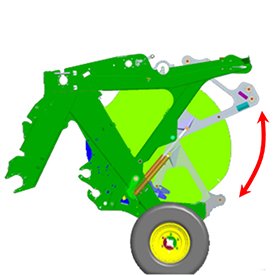
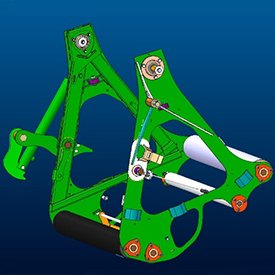
FRS provides a light structure, less than half of the traditional tailgate weight that opens the chamber quickly and removes belts from the bale.
Compared to a traditional tailgate:
- FRS can be actuated by fast cylinders with reduced dampening needs.
- FRS impacts the baler’s lifetime in a reduced way. Moving less than 250 kg (551 lb) puts less stress on the frame than moving 600 kg (1322.8 lb) in a similar time.
- FRS pivot is located at the center of the chamber, not on the top of the baler. Motion is even faster, and center of gravity is not impacted much by tailgate position.
Moving side sheets release the bale faster
Moving side sheets help prevent the bale from getting stuck in the chamber. When the light structure opens, each side of the chamber automatically moves 50 mm (2 in.). There is no more contact between the bale and the chamber; the bale is released and quickly falls by its own weight. Even in the worst wet conditions, the unloading process is as efficient as in dry straw.
This unique feature does not require complicated hydraulic or mechanical systems to be actuated. When the tailgate goes down, simple bearings push on cams located on both side sheets and lock the chamber sides in the baling position. When the tailgate opens, the pressure on the side sheets cam is automatically released, then a return spring quickly moves the chamber walls outside.
Locks located on both baler side lock the FRS when tailgate is closed.
|
|
  Improve visibility to baler options with updated video camera and screen options Improve visibility to baler options with updated video camera and screen options
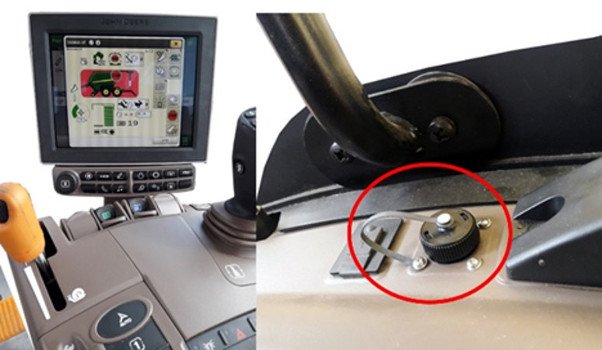
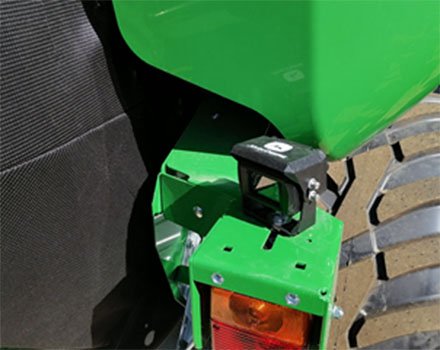
You can more clearly and conveniently keep an eye on the baling process with an updated video camera on V4X1R Balers equipped with Vision Pack.
The factory-installed camera offers:
- Higher definition with 77 percent more pixels
- Wider view of 120 degrees instead of 90 degrees
- Night vision thanks to infrared light-emitting diodes (LEDs)
- Better visibility in very bright or contrasted environments
- Integrated heating system to prevent dew from forming on the lens and obscuring the screen
- Long 10-m (32.8-ft) harness for ease of use
If you are not using a John Deere tractor with the 4240 Universal Display or GreenStar 3/Gen 4 integrated CommandCenter™ system, a dedicated screen is available.
- Clear picture with 17.8-cm (7-in.) 16/9 high-definition color screen
- Compatible with up to four cameras with split-screen or toggle-screen function
- Adjustable brightness and contrast provide optimum viewing
- Anti-reflection screen decreases glare
|
|
 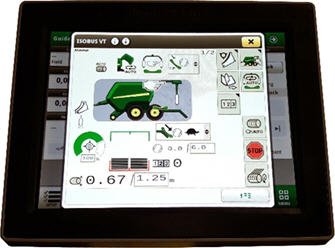 Advanced displays and electronics allow the operator to drive the baler from the monitor Advanced displays and electronics allow the operator to drive the baler from the monitor
All settings from the monitor
For any monitor, all R-Series Balers use ISOBUS architecture and can be fully set from the display. There is no need for the operator to leave the cab, even for density or greasing parameters (when equipped with optional automatic greasing system), as everything is managed on the display through drop-down menus. V451R and V461R Balers offer:
Settings
- Knife engagement/disengagement
- Knife set management (when equipped with MaxiCut™ HC 25 Premium)
- Drop floor lowering/raising
- Bale diameter adjustment
- Bale density adjustment (0 to 100 percent capacity)
- Softcore activation/deactivation
- Softcore pressure adjustment (0 to 100 percent capacity)
- Softcore diameter adjustment
- Net/twine choice
- Automatic/manual tying/wrapping starting
- Manual net/twine cylinder control
- Net layers adjustment
- Net tying delay adjustment
- Twine turns on each side (independent) adjustment
- Twine spacing adjustment
- Twine space to the edges adjustment
- B-Wrap® wrap system mode activation
- Lighting (side lights/beacon) control when option selected
- Automatic greasing system engagement/disengagement (when equipped with optional automatic greasing system)
- Automatic greasing duration and frequency
Information
- Bale shape indicators
- Current bale diameter/set bale diameter
- Current bale density/set bale density
- Knife set position
- Drop-floor position
- Near full alarm
- Stop indicator
- Net/twine choice
- Net/twine process status
- Bale ejection status (when equipped with optional unloading ramp)
- Tailgate status
- Softcore status
- Bale counters (10 operators x 10 fields = 100 counters)
- Time counter
- Clear error message
4240 Universal Display enhances operator comfort
For the most demanding operators, the V451R and V461R can be delivered with the 4240 Universal Display. This ISOBUS display offers a comfortable 21.5-cm (8.4-in) diagonal color screen and can manage the Tractor Baler Automation (TBA) function. The touchscreen offers an intuitive and user-friendly interface that easily allows the operator to adjust and control parameters similar to the Implement Display 1100 and all TBA parameters.
The 4240 offers extended capabilities for guidance, spraying management, farm management, and FarmSight™ applications.
To be used with ISOBUS or non-ISOBUS tractors, the 4240 Universal Display option is delivered with the following components:
- 4240 Universal Display
- Baler to rear tractor ISOBUS plug
- Baler ISOBUS plug to display harness – plugged into tractor battery
- Tractor cab corner to monitor harness
|
|